
Newsletter Subscribe
Enter your email address below and subscribe to our newsletter

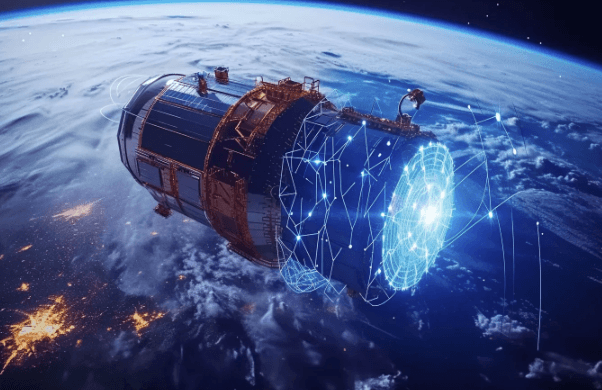
AI enables autonomous navigation, planning, and fault diagnosis for space missions, reducing latency and reliance on Earth-based control. It accelerates data analysis, supports rapid hypothesis testing, and enhances resilience amid constrained communications. Governance, provenance, and ethics frameworks are essential to ensure reproducibility and interoperability. While promising, effective deployment hinges on transparent decision-making, robust verification, and prudent oversight, leaving unresolved questions about governance maturity and long-term sustainability that merit careful scrutiny.
AI-driven autonomy is central to modern space missions, enabling spacecraft to navigate, plan, and diagnose faults with reduced ground intervention. The analysis evaluates autonomy routing decisions, balancing efficiency, safety, and resilience under constrained comms.
It emphasizes standardized interfaces, transparent fault diagnosis processes, and verifiable autonomy behavior, supporting policymakers and engineers in advancing autonomous operations while preserving human oversight and strategic freedom.
Turning data into insight lies at the intersection of science objectives and mission analytics, where AI-enabled data processing transforms heterogeneous observations into actionable hypotheses and plans.
Data mining and anomaly detection enable rapid pattern discovery, uncertainty reduction, and hypothesis generation.
Analytics-driven governance ensures transparent decision pathways, reproducible results, and policy-aligned prioritization of exploration targets, balancing autonomy with human oversight and risk awareness.
The analysis focuses on ai governance and data provenance, comparing robustness, transparency, and interoperability across architectures.
Findings emphasize tradeoffs between onboard autonomy and centralized oversight, guiding policy choices, standardization efforts, and investment in verifiable, scalable, mission-aligned AI solutions.
Systematic ethics governance and bias mitigation underpin trustworthy autonomy, ensuring transparent decision-making, robust validation, and cross-border coordination.
Data-driven risk assessment informs policy levers, standards, and accountability mechanisms guiding resilient, incremental progress across missions and collaborations.
AI governance is implemented through formal standards, risk-aware decision frameworks, and continuous auditing; mission autonomy is calibrated with predefined thresholds, independent safety reviews, and transparent data-sharing policies, ensuring accountability while preserving operational flexibility for exploration objectives.
Like a weathered compass, AI bias risks skewing space decisions; bias amplification and autonomy tradeoffs demand rigorous governance. The analysis shows systematic monitoring, transparent models, and scenario testing to mitigate risks while preserving autonomous capability and mission resilience.
AI mitigates communication delays in deep space via onboard autonomy and predictive planning; autonomy governance structures ensure resilient decision-making, verification, and fallback protocols, enabling robust mission outcomes while preserving operator freedom through transparent, data-driven policy frameworks.
See also: nicephrase
Cautious optimism illuminates cost implications: AI-enabled spacecraft demand upfront development funds, ongoing maintenance, and redundancy, while yielding lifecycle savings via autonomous ops. Cost optimization and power budgeting strategies, supported by data-driven models, guide policy toward scalable, freedom-friendly exploration.
AI provenance is maintained through auditable data lineage, immutable logs, and standardized metadata; mission assurance formalizes verification, validation, and change control, ensuring results are traceable, reproducible, and credible for policy-driven, data-driven evaluation by a freedom-seeking audience.
In the editorial theater of space, AI stands as a seasoned navigator steering through fog and glare alike. Like a lighthouse chained to a ship’s hull, algorithms illuminate unseen hazards, chart resilient routes, and translate cosmic signals into actionable insight. Yet the beam requires careful governance, provenance, and human-in-the-loop checks to prevent drifting into bias or missteps. The allegory resolves into a policy-driven creed: empower autonomous prowess, anchored by transparency, oversight, and enduring ethical stewardship.
